Posted on

Mexican Fire Opal

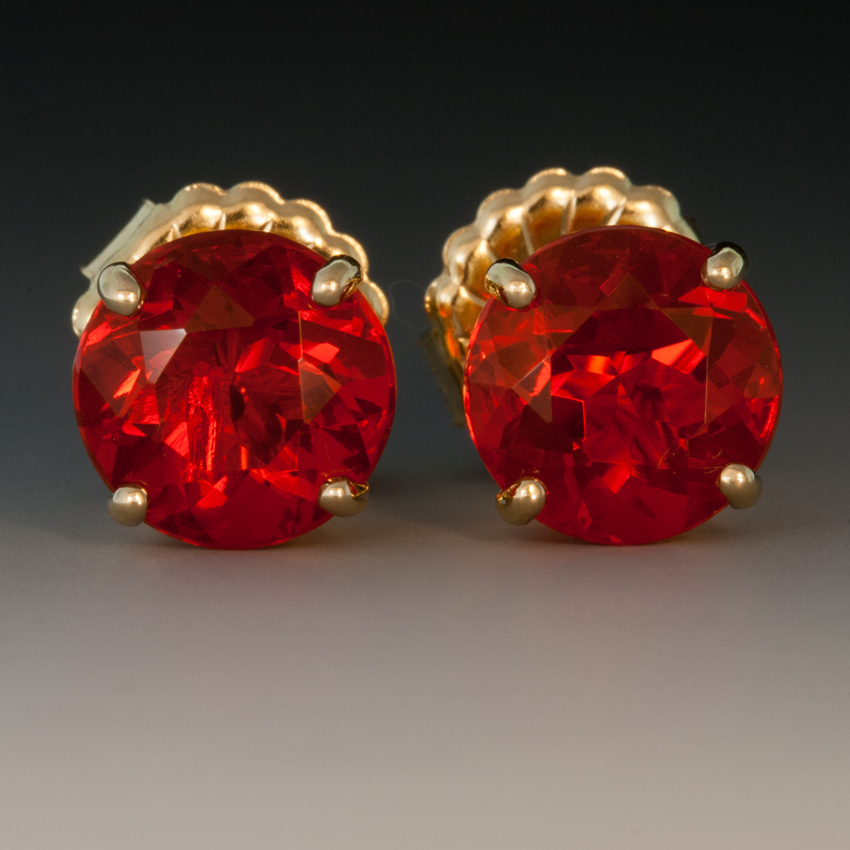
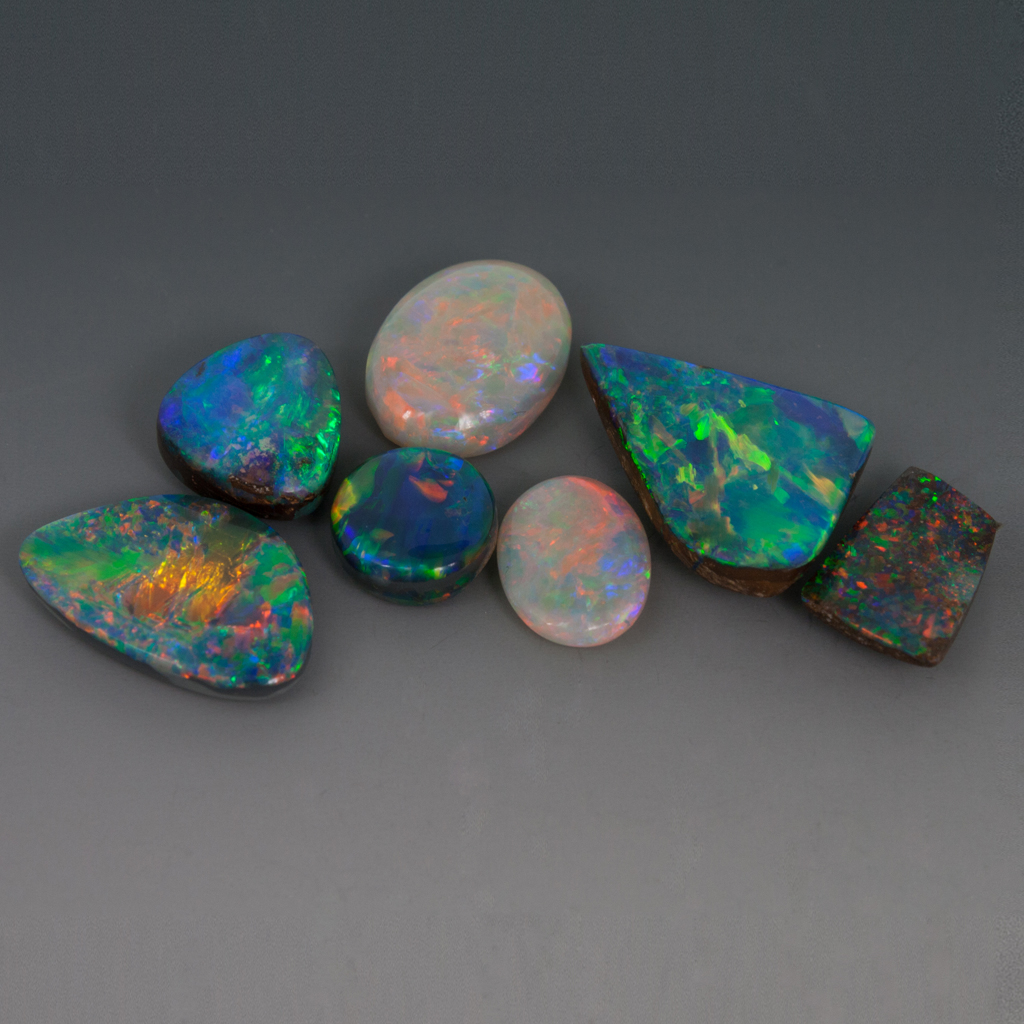
Mexican Fire Opal is a type of crystal opal that shows magnificant flashes of red/orange color. Unlike most opals, fire opal is usually faceted so that you get sparkle in addition to vibrant color. Fire opal was born in fire in the ancient volcanoes of Mexico. It forms when water seeps into silica-rich lava, filling seams and hollows. Under heat and pressure, the silica forms a solid gel that traps the remaining water within its structure. Fire opal that displays play-of-color is rare because volcanic opal forms relatively quickly and the spheres of silica rarely have time to settle into the diffraction grids that create play-of-color.

Posted on

Opal, October Birthstone

“The Romans established opal as a precious gemstone, obtaining their supplies from traders in the Middle East. The early Greeks believed the opal bestowed powers of foresight and prophecy upon its owner. In Arabian folklore, it is said that the stone fell from heaven in flashes of lightening.” (Opals Down Under)

Opal has a hardness of 5.5 – 6.5 on the Mohs scale, so it is more delicate, cabable of being scratched and its surface worn down. Opal rings are beautiful but should be worn with care. Opals make exculsive jewelry pieces because no two opals are alike. Finding a matched pair of opals for earrings is a challenge. When it does happen it is called a “split”.

The opal is a hydrated amorphous form of silica. As such, its water content may range from 3 to 21% by weight, but is usually between 6 and 10%. The internal structure of precious opal makes it diffract light. Depending.on the conditions in which it formed, it can take on many colors. Black opals are the rarest, white and greens are the most common. Opal is the national gemsotne of Australia.

Gem opals can be classified into four groups, light, dark, boulder, and black.

Light Opal, the most common, has a translucent milky to opaque white background. Crystal Opal is transparent to translucent.

Fire Opal, a type of crystal opal, is reddish orange to red, is normally translucent to semi-translcent, and is found in Mexico and Ethiopia.
Posted on

Hand Made Sapphire Jewelry

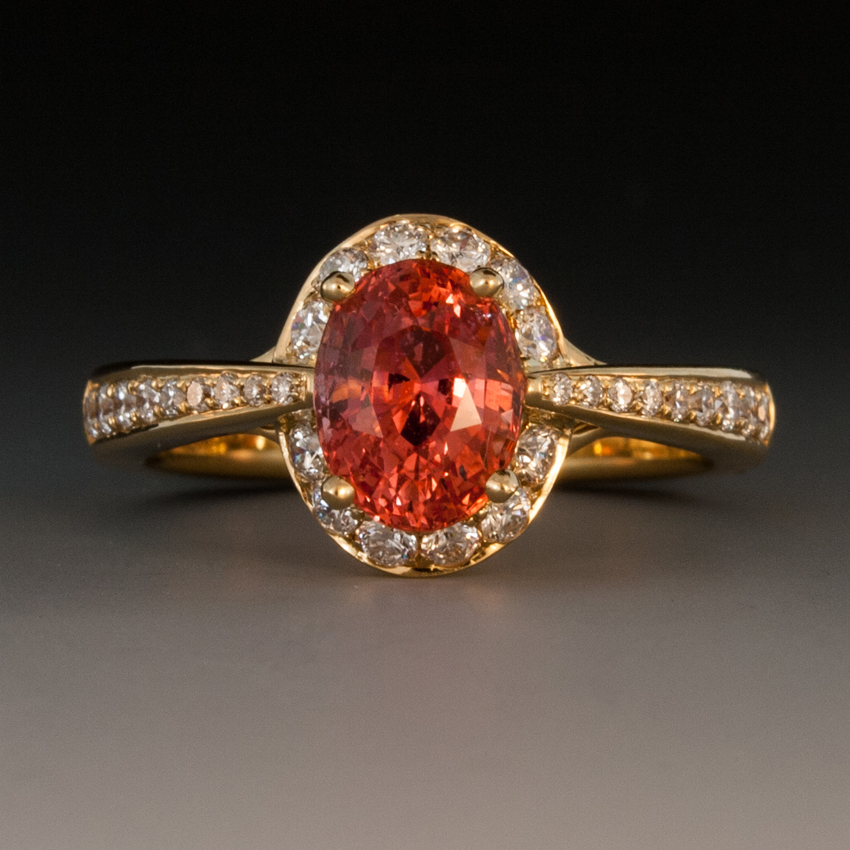
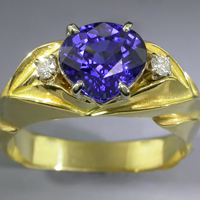
Padparadscha Sapphire Ring with Diamonds, 18KY.

Sapphire is the perfect engagement ring stone because of it’s hardness. Our hand made jewelry is also made to last a life time.

Padparadscha is the rarest type of Sapphire. The word means “The color of the lotus”. Sapphire is a wonderful ring gemstone because it has a hardness of 9 on the Mohs scale making it less susceptible to damage than any other gem except diamond. And it comes in every color of the rainbow except red when it is considered ruby. We have a large collection of sapphire jewelry and loose sapphire gemstones available for purchase in our gallery or our online store.

Posted on

Sapphire, September Birthstone

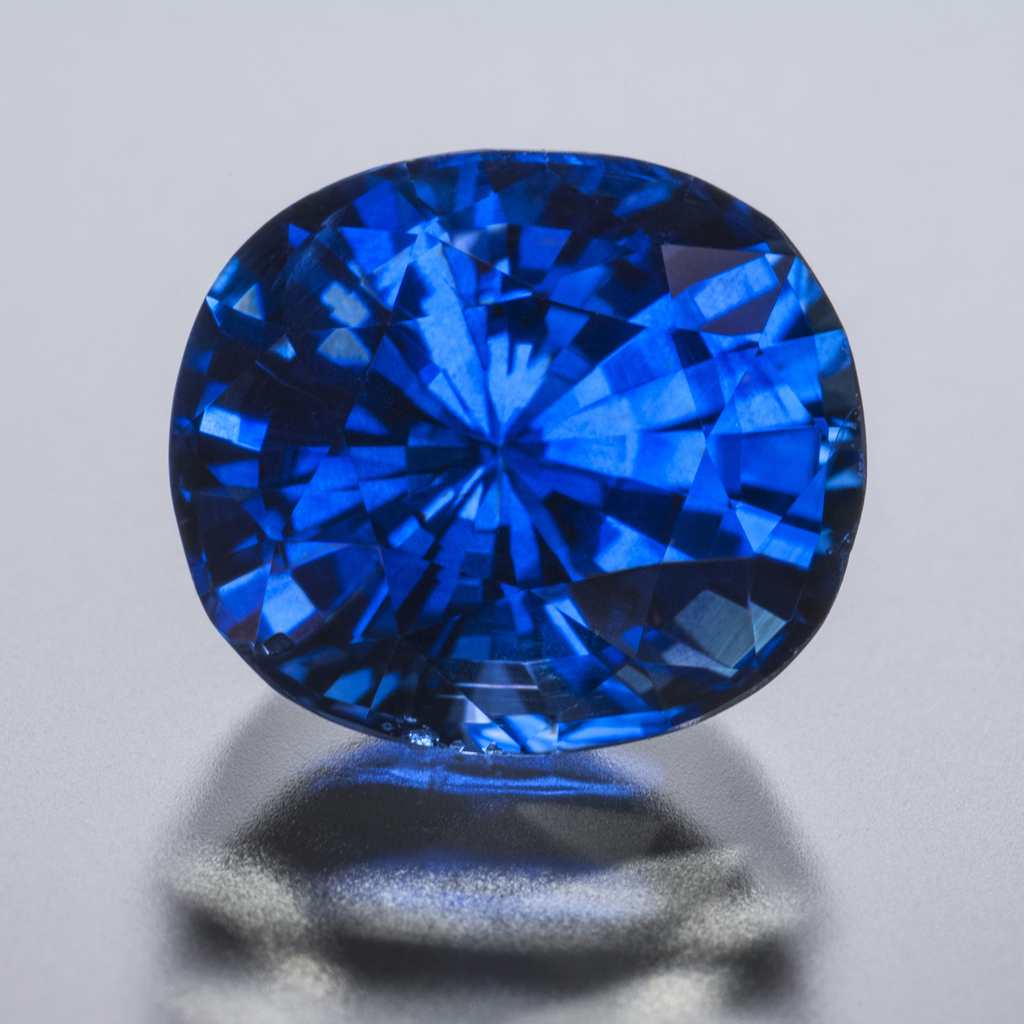
Blue Sapphire, 2.96 carat.

If your birthday falls in September, you are one of the lucky ones who can claim Sapphire as their birthstone. It is also the gem of the 45th wedding anniversary.

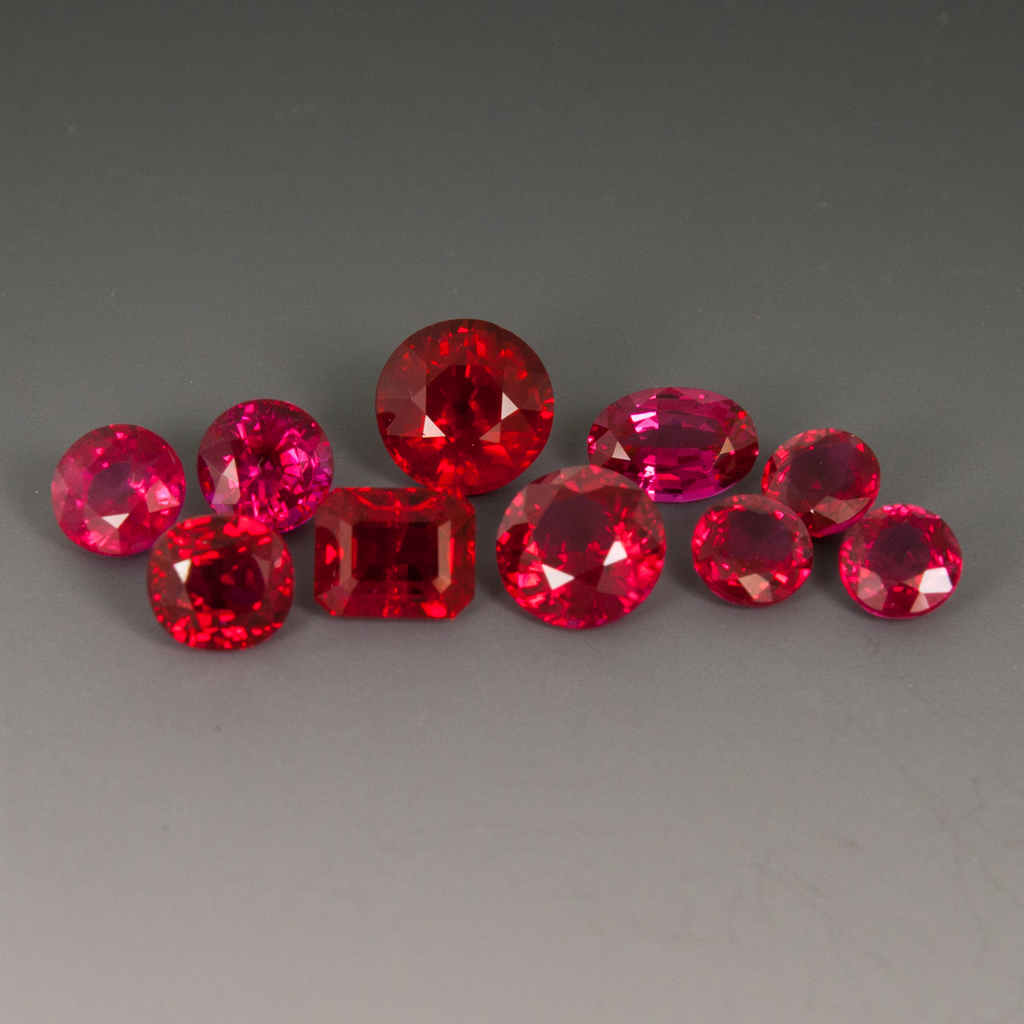
Sapphire is typically blue in color, but natural “fancy” or “parti colored” sapphires occur in yellow, purple, orange, green, and brown, Sapphires may also be black, gray, and colorless. The pinkish orange variety of sapphire is called Padparadscha.The only color which sapphire cannot be is red, which would make it a ruby.

Sapphire is 9 on the Mohs hardness scale making it (corundum) the third hardest mineral, after diamond (10) and moissanite (9.5). Why does this hardness matter? Because your sapphire will not scratch as easily as other gemstones, it makes sapphires perfect for ring stones, especially engagement rings.

Sapphire is found in Eastern Australia, Thailand, Sri Lanka, China (Shandong), Madagascar, East Africa, and in a few locations in North America, mostly Montana. Sapphire and ruby are often found in the same geological setting. Our sapphires come from these locations.

Posted on

“Fantasy Cut” Carved Gemstones

Loose Colored Gemstones are Art.

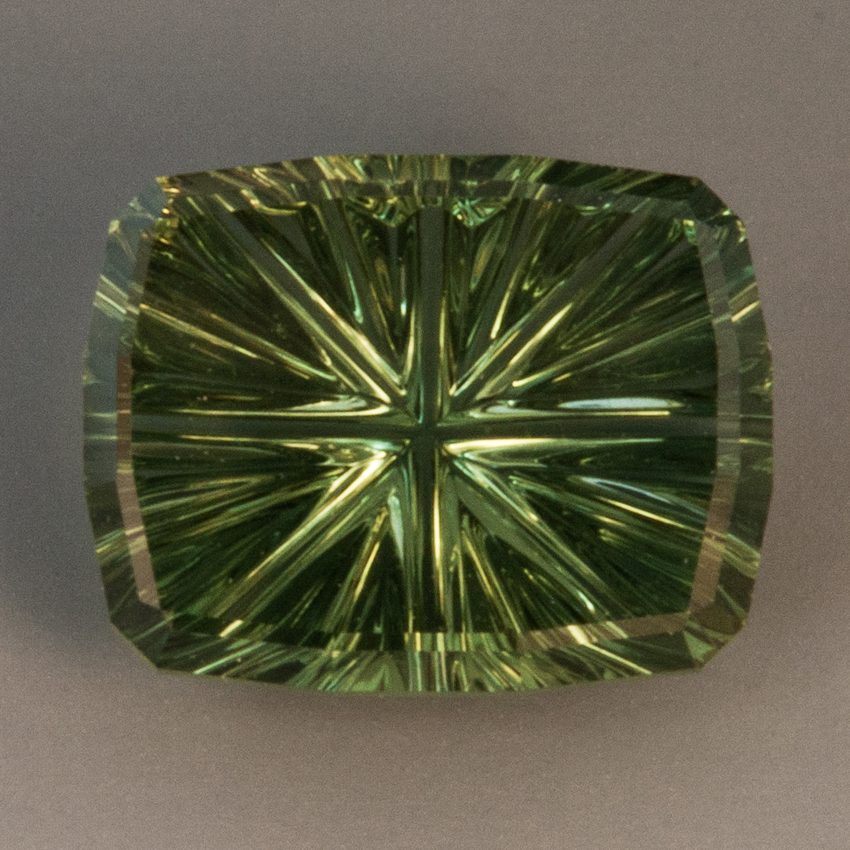
This Green Sapphire is a Fantasy Cut Gem Carving by Cutting Edge Award winning gem cutter John Dyer. It would make a beautiful engagement ring flanked with two trillion cut diamonds!

The trend of innovative gem cutting began in both Europe and America, and many attribute it to a German cutter named Bernd Munsteiner (b. 1943).  He began in Idar-Oberstein, a region of Germany that has been famous for over 500 years for its tradition of fine gem cutting. Munsteiner’s style was geometric, abstract and thoroughly modernist. He would leave parts of a gem raw and unpolished to produce a stark contrast with the cut and polished sections. Often he would cut and facet only the back of the gem, making the design appear to be embedded in the gemstone. Sometimes he would integrate inclusions into the design.

The gem cutting establishment in Idar-Oberstein rejected his work but international critics were enthusiastic and Munsteiner went on to receive many international awards. Following the introduction of “Fantasy Cut” gemstones by Munsteiner in the 70’s, many lapidary artists have begun producing this style of gem cutting art. Bernd’s son Tom continues this tradition along with many other lapidary artists, some of whom are represented in our gallery. Other Cutting Edge lapidaries in our gallery include Larry Winn, Steve Walters, Michael Dyber, and John Dyer.

Posted on

Peridot Jewelry

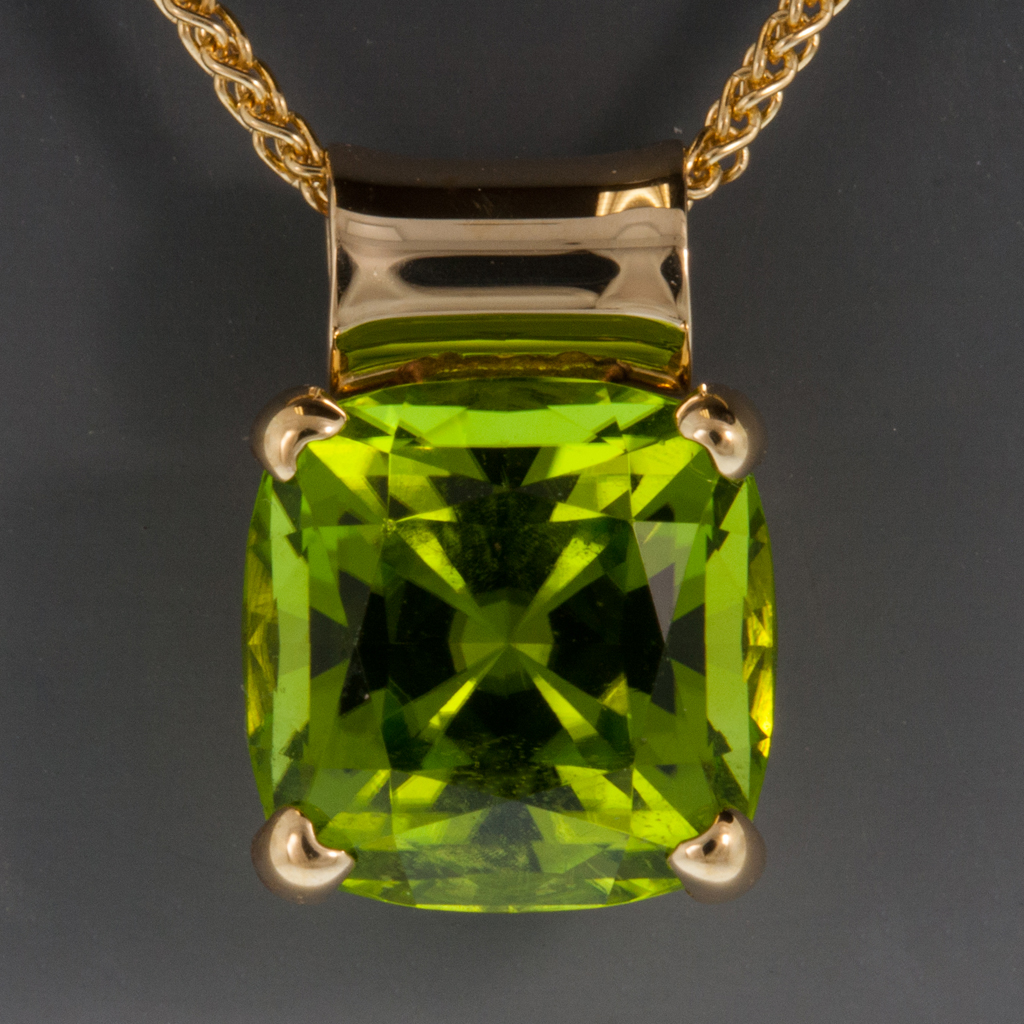
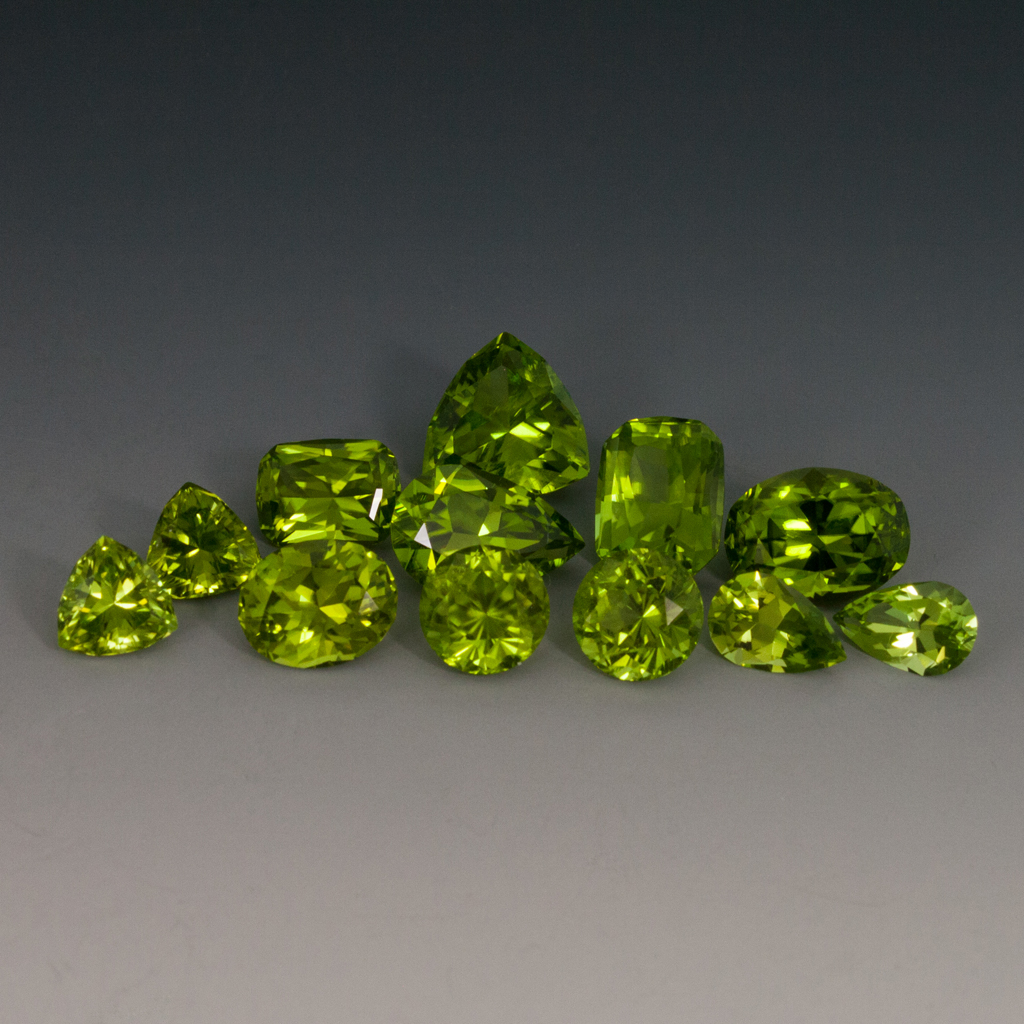
Peridot jewelry is the perfect gift for the August woman. Especially when it’s “her” color. Our loose peridot, cut locally in the Berkshires, have very good clarity and a deep lime green color. We have several pieces of peridot jewelry on display in our gallery and on this site. Watch our video below to see more peridot jewelry and loose peridot gemstones.

Posted on

Peridot, August Birthstone

Lime green Peridot, the color of late summer, is the birthstone for August. We have many loose Peridot from Arizona and Pakistan, cut locally in the Berkshires. These gemstones are available for purchase by collectors of fine gemstones, or for a custom designed piece of jewelry. Click here to learn more about peridot.

Posted on

Sapphire

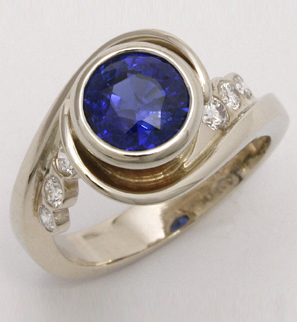
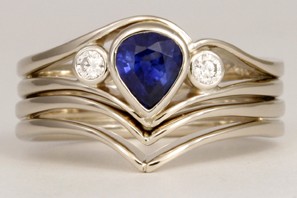
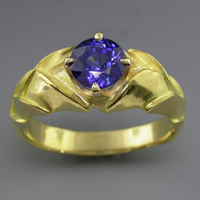
big3282rs Sapphire Diamond Wedding Set Sapphire ring 1s Sapphire ring 2sThe hardness of sapphire (9 on the mohs scale) and it’s wide variety of colors makes it a most desirable gemstone for jewelry. Blue is the preferred color, however it comes in violet, green, yellow, orange, pink, purple, and intermediate hues. Some stones exhibit the phenomenon known as color change, most often going from blue in daylight or fluorescent lighting to purple under incandescent light. Sapphires can even be gray, black, or brown.

Kashmir, is considered intensely saturated and velvety. Rare sapphires from Kashmir set the standard for blue.

Royal Blue is the world’s most famous engagement ring: Kate Middleton’s and Princess Diana’s sapphire!

Padparadscha is a rare and valuable pinkish orange sapphire. It’s name is derived from the Singhalese word for aquatic lotus blossom, which has an unusual salmon color.

There are a number of processes used to alter the color, clarity, or improve the durability of gems. Heat treatment is the most common alteration in sapphire.

Posted on

Pearls of Wisdom


A Quick Guide to Pearl Types

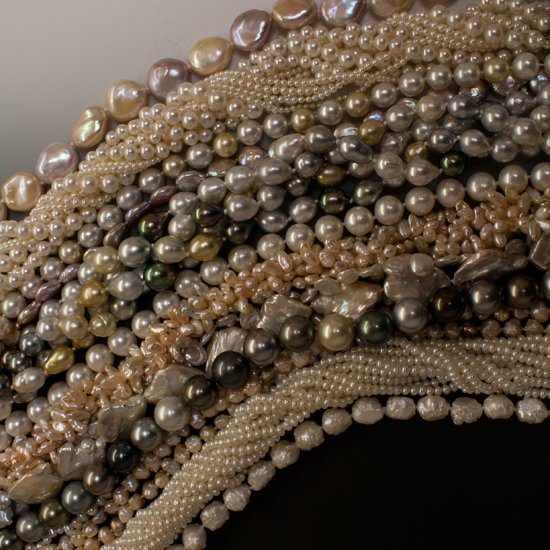
Pearl 2 300099Akoya – Lustrously Delicate. Cultured Pearls farmed in Japanese and Chinese ocean water, created by a type of oyster called Pinctada fucata martensii; The “Akoya Pearl” Oyster. Usually found in sizes of 2 – 8mm with 8 – 10mm considered very large for Akoya pearls. Known for their white to cream coloration, while Japanese value a very slight pink tone. They are valued for their mirror-like luster and depth (orient).

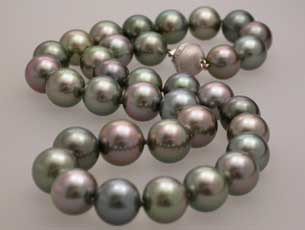
Tahitian – Black and Bold. Cultured pearls farmed in Polynesian ocean water, created by the Pinctada margaritifera oyster or the “black-lip oyster”. These oysters are larger and can produce pearls as large as 16mm though 8 – 10mm is more common. Color ranges from light gray to very dark gray, and can exhibit greens, blues and purples, with the most valued examples showing an “oil slick” type spectrum of colors. These pearls are often called “peacock” color and are among the most prized.

South Seas – The Big Kahuna. Cultured Pearls farmed mostly in Australian ocean waters, but some in other south seas locations such as he Philippines and Fiji. Created by the Pinctada maxima; the “gold-lip oyster” which produce the largest pearls. Typical size is 10 – 12mm but some can be over 20mm. They are often white, but also often come in a golden-yellow color called “golden pearls.” Rarer are the pinks. Australian Farms tend to produce White Pearls, while Golden Pearls most often come from more easterly locations such as the Philippines.

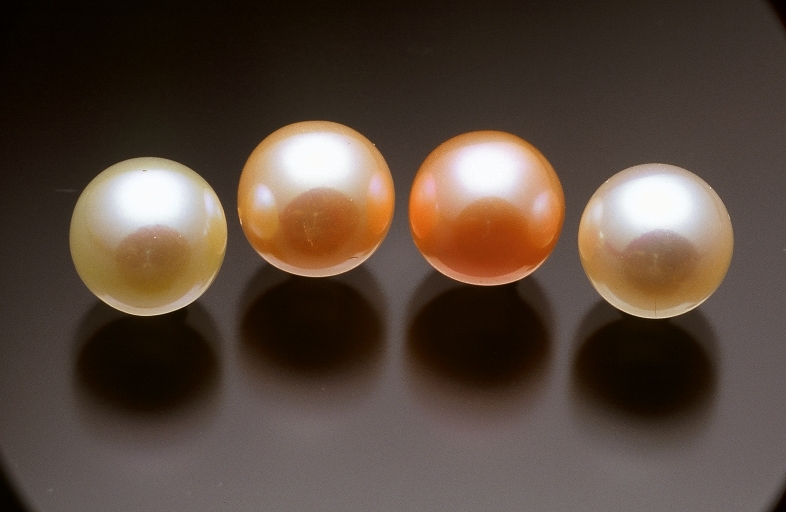
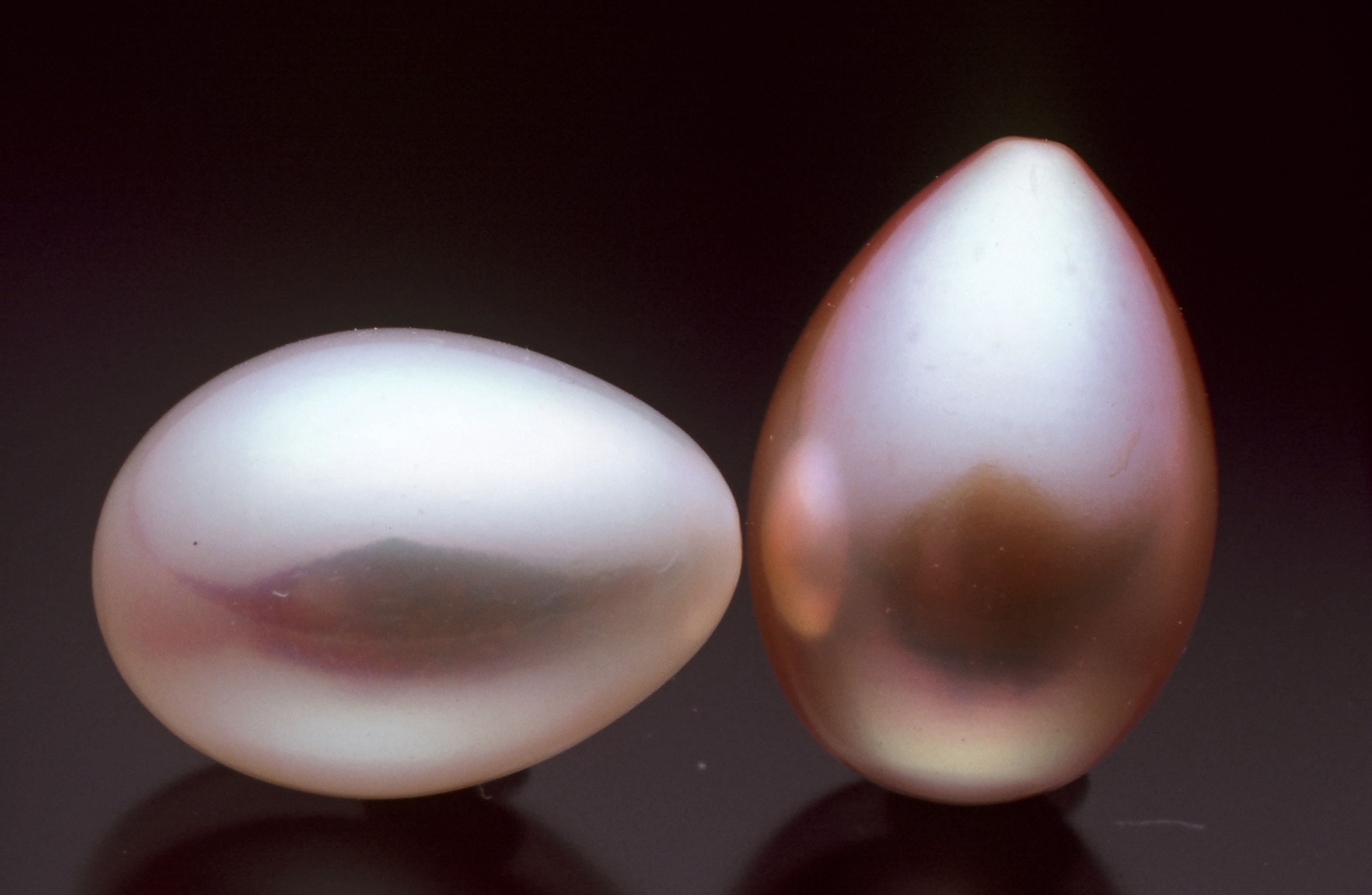
2376Freshwater Pearls – Affordable Elegance. Cultured mostly in Chinese freshwater rivers and lakes. Some are cultured in Japan and other locations. Generally created by freshwater mussels. Freshwater pearls were cultured in Japan starting in the early 1900’s, but production was limited peaking at 6 tons in 1971, before pollution wiped out most Japanese production. Large-scale freshwater pearl farming started in the 1970’s and 80’s with current production levels over 1500 tons annually. Freshwater pearl culturing is advancing rapidly. Pearls produced early on were mostly rice-grain shaped. Later a “potato” oval shape was produced, and more recently near round and round pearls are being produced. Freshwater pearls have been increasing in size as cultivation techniques improve. Today, they rival Tahitian and South-Sea pearls in size and examples of 12mm and larger are beginning to appear. Freshwater pearls, while beautiful. typically do not achieve quite the same luster or roundness as saltwater pearls, and prices are thus more affordable.6435

Pearls crop super smKeshi Pearls are small non-nucleated pearls typically formed as by-products of pearl cultivation. They are always baroque or unusual shaped and found in wide range of pastel colors.